
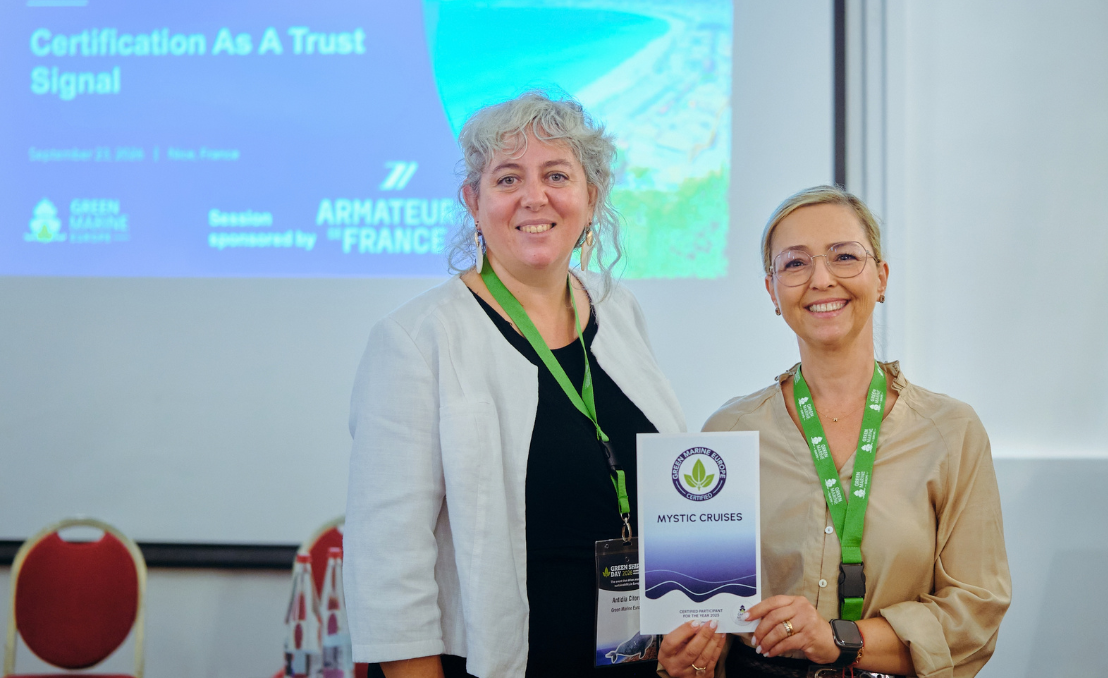
Mystic Cruises Renews Its Green Marine Europe Certification
Mystic Cruises has received its latest Green Marine Europe certificate, continuing its participation in the maritime environmental assessment and continual improvement programme.
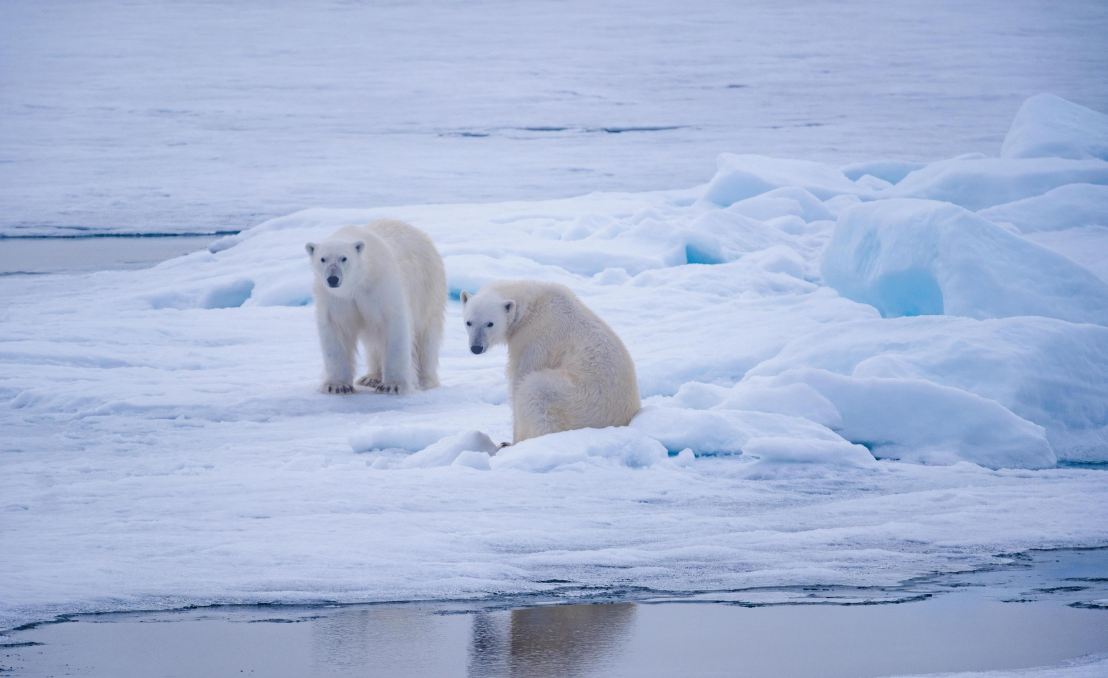
Arctic wildlife responds to human presence in ways that are not always immediately visible. When we imagine a disturbed wild animal, we might picture it running, flying or swimming away. But in the Arctic, the first signs can be far more subtle: an animal lifting its head more frequently, stopping feeding, changing direction, becoming more alert or interrupting a period of rest.
Understanding these reactions is an important part of responsible expedition travel. Sometimes, the most respectful wildlife encounter is not about getting closer. It is about recognising when we are already close enough.
Wild animals constantly assess what is happening around them. Human presence simply becomes another factor they need to evaluate.
The response can vary greatly depending on the species, the individual animal, the season, whether young are present and even the direction, speed and noise of an approaching person, Zodiac or vessel.
An animal that remains in the same place may still have changed its behaviour because of us. This is why one of the most important principles when observing Arctic wildlife is remarkably simple: our presence should not determine what the animal does next.
The Norwegian Polar Institute stresses the duty to avoid unnecessary disturbance to wildlife in Svalbard, while AECO’s current wildlife guidelines place undisturbed observation at the heart of responsible encounters.
Few Arctic encounters are as memorable as seeing a polar bear in the wild. Yet polar bears are also a powerful example of why distance and behaviour matter. Bears may be curious, cautious or unpredictable, and human presence can influence them before observers realise it.
Responsible observation therefore begins well before an animal shows a dramatic reaction. The priority is to watch its behaviour, avoid interfering with its movement and be prepared to retreat if the encounter begins to affect what the animal is doing.
In Svalbard, this responsibility is reinforced by law. Visitors must remain at least 300 metres from polar bears, increasing to 500 metres between 1 March and 30 June, as polar bears are particularly vulnerable to disturbance during this period. If a bear is discovered at a shorter distance, there is also an obligation to retreat in the circumstances defined by the regulations.
But legal distance is only one part of responsible wildlife watching. If an animal visibly alters its behaviour, that change itself can be a sign that our presence is having an effect. The lesson is clear: a successful polar bear encounter should not be measured by proximity, but by the opportunity to witness the animal behaving naturally.
A group of walruses resting on a beach or ice floe may appear remarkably relaxed. That rest, however, should never be taken for granted.
Walruses can be sensitive to boats and human presence, particularly females accompanied by calves. Increasing alertness, movement or repeated changes in posture can indicate that observers need to reconsider their position.
AECO’s current guidance advises keeping noise to a minimum, allowing the animals’ behaviour to determine the encounter and retreating quietly if signs of disturbance appear. In Svalbard, motorised vessels must also remain at least 150 metres from walrus haul-out sites and observe speed restrictions when passing nearby.
Wildlife observation therefore becomes an exercise in patience. Sometimes remaining still, or moving away, creates a better encounter than attempting to reduce the distance.
Arctic summers bring extraordinary concentrations of birdlife to cliffs, islands and coastal areas. They also coincide with one of the most sensitive periods in the birds’ annual cycle.
During nesting and chick-rearing, disturbance can cause adult birds to temporarily leave their nests. Eggs and chicks may then become more exposed to weather or predators. Many Arctic species also nest directly on the ground, making eggs and young surprisingly difficult to spot.
The birds themselves often tell us when something is wrong. Arctic terns and skuas may become increasingly vocal or defensive when people move too close to nesting areas. AECO’s site guidance explicitly recommends retreating when these birds begin defensive attacks and carefully watching where you step to avoid eggs and chicks.
What may look dramatic or exciting from a visitor’s perspective can actually be a warning. Knowing how to read that warning changes the experience. The goal is no longer simply to see wildlife, but to understand what we are seeing.
Arctic foxes can sometimes appear surprisingly confident around people. Their curiosity should never be interpreted as permission to approach, touch or feed them.
AECOrecommends staying quiet and allowing inquisitive foxes to approach on their own terms, limiting time spent near them and keeping well away from denning areas. Feeding is strongly discouraged because animals living near settlements, cabins or camps can gradually lose their natural fear of people.
Signs of disturbance can include barking, yelping, flattened ears, an upright tail or behaviour suggesting that the fox is trying to flee. Around dens and pups, sensitivity to disturbance is particularly important.
Research also illustrates how human activity can influence fox behaviour in less obvious ways. Studies have found changes in activity patterns and den attendance where tourism pressure is higher, showing that an animal does not necessarily need to leave an area completely for human presence to have an effect.
Reindeer can often appear exceptionally tolerant of people. Even here, context matters. Their responses can vary according to how people move, their speed, direction and noise. Responsible observation means allowing animals to graze, rest and ruminate without interference and increasing distance if they become alert or change their behaviour.
This is particularly important when calves are present. An animal spending time watching us is spending less time doing something else. In an environment where feeding opportunities and energy conservation matter, avoiding unnecessary disturbance is therefore more meaningful than simply avoiding dramatic reactions.
AECO’s current wildlife guidance includes dedicated recommendations for encounters with Arctic reindeer, reinforcing the principle that observation should not interfere with their natural behaviour.
The same philosophy applies on the water. Whales, dolphins and other cetaceans can sometimes be curious and voluntarily approach vessels or small boats.
When this happens, the interaction should remain in the animals’ control. AECO advises that if cetaceans choose to stay near a vessel, passive drifting can be the most appropriate response rather than actively pursuing them.
This reverses the usual idea of wildlife watching. Instead of asking, How can we get closer?, we ask, What is the animal choosing to do? That small change in perspective can make an enormous difference.
Expedition travel offers something increasingly rare: the opportunity to observe wildlife in places where nature still sets the rules. There are no guaranteed appearances, carefully timed performances or promises that an animal will remain exactly where we want it to be.
And that is precisely what makes these encounters meaningful. For Mystic Cruises, responsible exploration means approaching these moments with curiosity, patience and respect. Seeing an animal is only one part of the experience. Understanding its behaviour, and recognising our own influence on it, allows us to experience the Arctic on its own terms.
Because the value of a wildlife encounter should never be measured by how close we managed to get. Sometimes, the greatest privilege is simply being there without changing what happens next.
How can you tell if Arctic wildlife is being disturbed?
Signs vary between species but can include increased alertness, repeatedly lifting the head, interrupting feeding or rest, changing direction, becoming vocal or attempting to move away. A dramatic escape response is not required for disturbance to be taking place.
How close can visitors get to polar bears in Svalbard?
The minimum legal distance is 300 metres. Between 1 March and 30 June, the minimum increases to 500 metres as polar bears are particularly vulnerable to disturbance during this period. Visitors must also avoid unnecessarily disturbing, attracting or pursuing polar bears.
Why is distance alone not enough when observing wildlife?
Different animals respond differently to people, vessels, sound and movement. Even when a recommended or legal distance is respected, a change in behaviour can indicate that the encounter is already affecting the animal.
Should people approach an Arctic fox if it appears curious?
No. AECO recommends allowing the fox to decide whether to approach and never feeding or attempting to touch it. Time spent near foxes should also be limited, particularly around denning areas.
What should a vessel do if whales approach?
When cetaceans voluntarily remain close to a vessel, passive drifting can be preferable to actively following them. The animals should be allowed to control the interaction.
What is the main principle of responsible Arctic wildlife observation?
The objective is to observe wildlife without unnecessarily changing its natural behaviour. In practical terms, that means watching carefully, keeping an appropriate distance and being ready to stop, retreat or leave when necessary.
Mystic Cruises has received its latest Green Marine Europe certificate, continuing its participation in the maritime environmental assessment and continual improvement programme.

Under the theme “From Policy to Practice: Powering Maritime Excellence”, World Maritime Day 2026 highlights how regulation, training and everyday decisions shape safer and more responsible maritime operations.
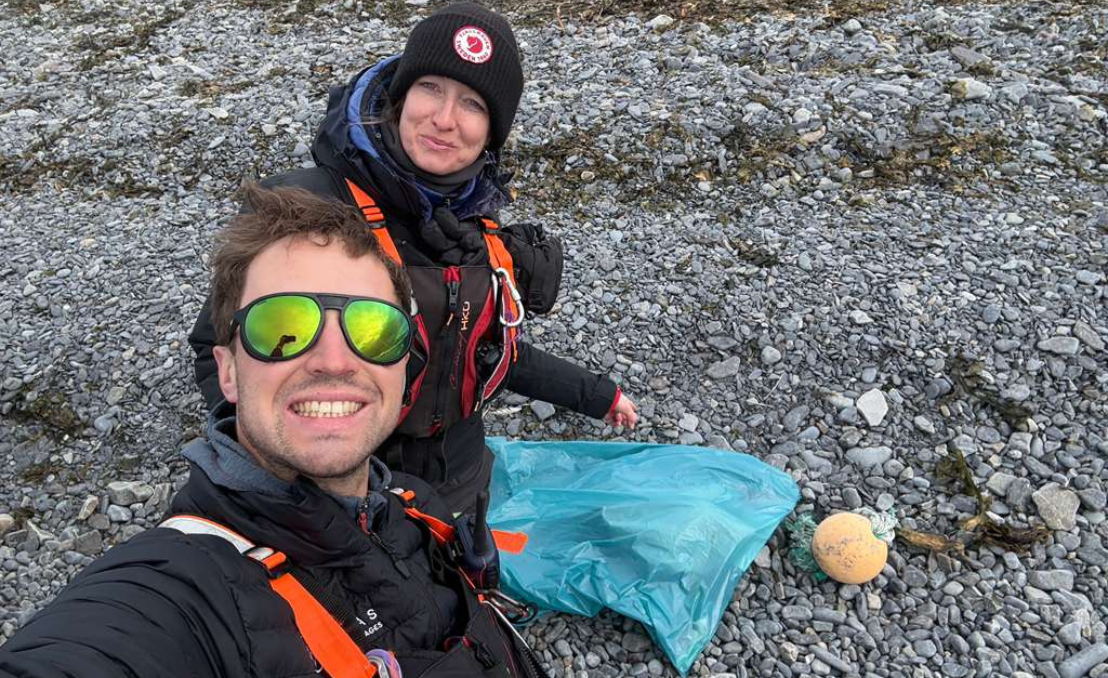
Five coastal clean-ups carried out during World Voyager’s Arctic operations removed 53.5 kg of waste from more than one kilometre of Svalbard coastline.