An Arctic clean-up can sound like a small intervention against a global problem. But when the results are measured, each action becomes part of a much clearer picture.
Last month, we shared how protecting the Arctic translates into direct action at Mystic Cruises, from raising awareness about marine pollution to organising coastal clean-ups in some of Svalbard’s most remote locations.
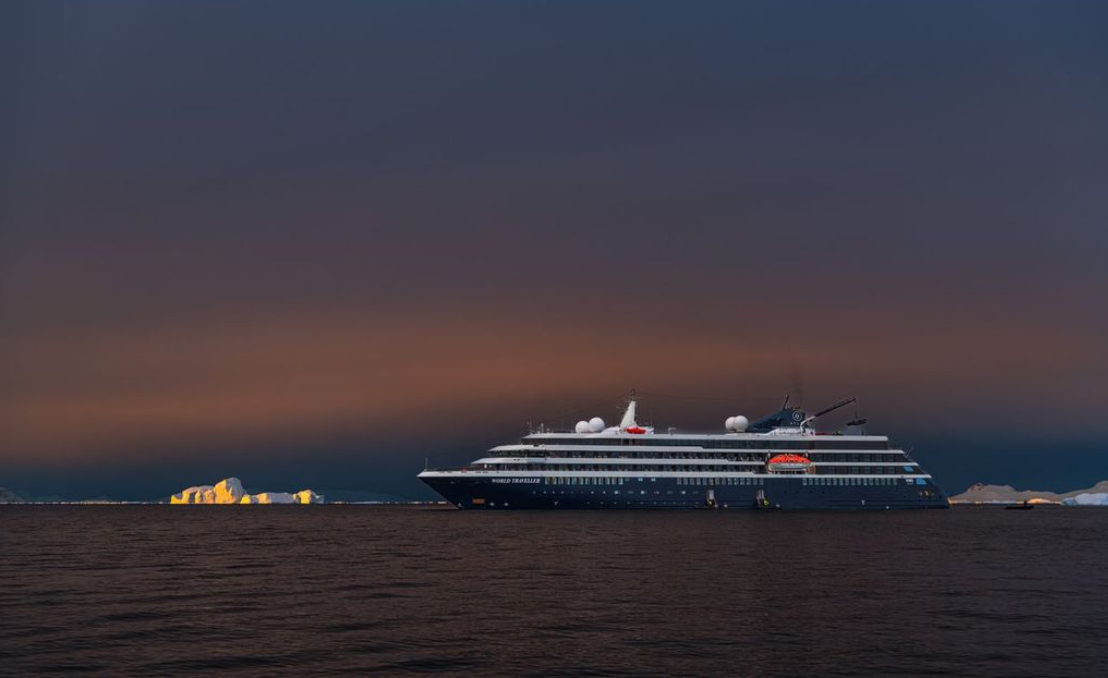
Now, new figures from World Voyager allow us to put part of that commitment into numbers. Between 20 and 28 July 2026, five coastal clean-ups carried out during the ship’s Arctic operations resulted in 53.5 kilograms of waste being removed from Svalbard’s shores. In total, the teams covered more than one kilometre of coastline and collected approximately 105 individual pieces of marine litter.
The impact, in numbers
Across just five clean-up actions, the results recorded aboard World Voyager were:
- 5 coastal clean-ups
- 53.5 kg of waste collected
- Approximately 105 pieces removed
- 1,030 metres of coastline cleaned
- 5 different locations in Svalbard
Behind every figure is something that no longer remains on an Arctic beach.
Five locations, one shared purpose
The first documented action took place on 20 July at Tesitpynten–Mohnbukta, where 4.5 kg of waste were removed along 150 metres of coastline.
Three days later, at De Geerbukta–Lomfjorden, the team covered 300 metres and collected 17 kg of marine litter. At Midtbreen–Wijdefjorden, on 24 July, another 7 kg were collected across 250 metres of shoreline.
The following day, Jakobsenbukta recorded the largest amount collected during the five documented actions: 18 kg, comprising approximately 49 individual pieces found along just 160 metres of coast.
The final action included in the report took place at Eidembukta on 28 July, where another 7 kg of waste were removed from 170 metres of coastline. Taken together, these actions resulted in 53.5 kg of waste being removed in little more than a week.
What the numbers do not show
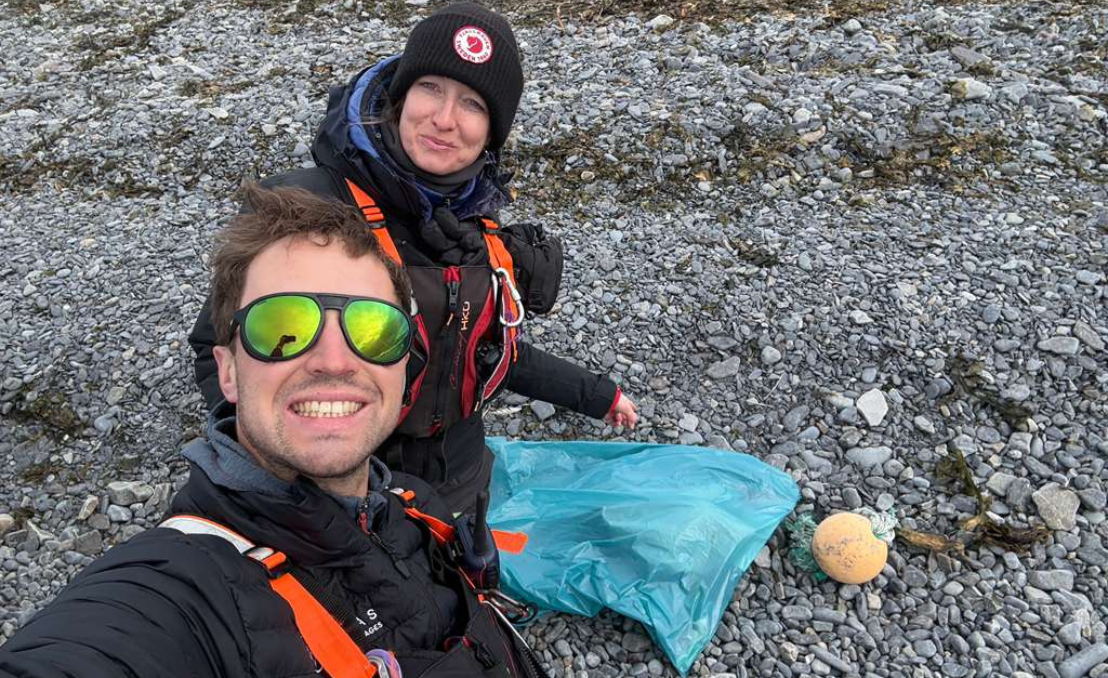
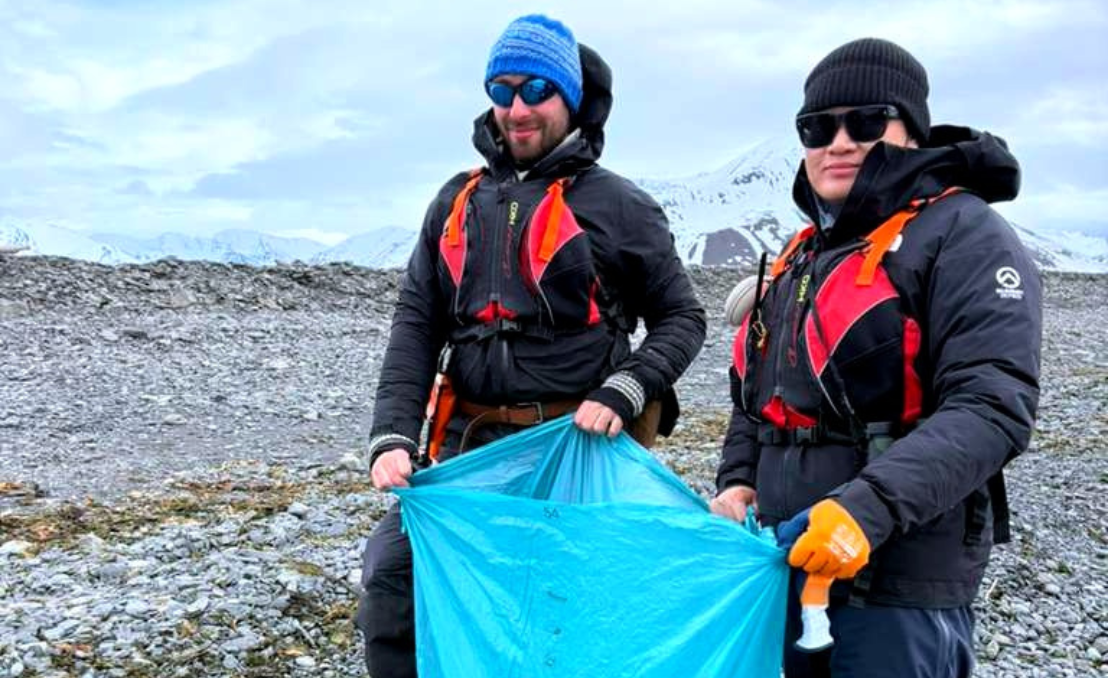
Weight alone tells only part of the story. Photographs recorded during the clean-ups show ropes, netting, buoys, plastic objects and other debris scattered across otherwise remote Arctic landscapes.
They reinforce something highlighted in our previous Protecting the Arctic article: geographical isolation does not protect the Arctic from marine pollution. Even coastlines far from major population centres can accumulate plastics and materials associated with maritime activity, transported over long distances before eventually reaching shore.
This is precisely why access matters. Expedition ships are able to reach coastal areas where regular clean-up operations can be difficult to organise. When safety, environmental, operational and weather conditions permit, that access can become an opportunity to leave a destination a little cleaner than it was before.
For Mystic Cruises, these initiatives form part of a broader approach to protecting the environments explored during expedition operations.
From commitment to measurable action
In our previous Protecting the Arctic article, the focus was on why initiatives like these matter. These latest figures add another important dimension: measurement.
Recording the amount of waste collected, the number of pieces found and the distance covered makes it possible to understand the scale of each action and, over time, to see how a series of relatively small interventions can build into something more significant.
A 150-metre stretch of beach. Then another 300 metres. Then 250 more. Four kilograms here. Eighteen kilograms there. Together, they become more than one kilometre of Arctic coastline cleaned and 53.5 kg of marine litter removed.
Protecting the places we explore
No single clean-up can solve the global challenge of marine pollution. But that does not make individual actions insignificant.
They remove physical waste from sensitive environments. They make an often invisible global problem tangible. And they remind everyone involved in exploring remote regions that access comes with responsibility.
For Mystic Cruises, We Are Protecting Our Environment is more than a statement of intent. It is a commitment that can also be measured through actions like these, one beach, one piece of marine litter and, now, 53.5 kilograms at a time.
Because protecting extraordinary places starts by acting when the opportunity is right in front of us.
Frequently asked questions
How much waste did World Voyager remove from Svalbard’s shores?
Between 20 and 28 July 2026, five coastal clean-ups removed a total of 53.5 kg of marine litter.
How much coastline was cleaned?
The teams covered a total of 1,030 metres of coastline, representing just over one kilometre.
How many pieces of marine litter were collected?
Approximately 105 individual pieces were recorded across the five clean-up actions.
Where did the clean-ups take place?
The documented actions took place at Tesitpynten–Mohnbukta, De Geerbukta–Lomfjorden, Midtbreen–Wijdefjorden, Jakobsenbukta and Eidembukta.
Why are Arctic coastal clean-ups important?
Remote Arctic shores can still accumulate marine litter transported over long distances. Clean-ups remove physical waste from sensitive environments and help make the scale of marine pollution more visible.
How do these clean-ups fit into Mystic Cruises’ sustainability approach?
They form part of Mystic Cruises’ wider commitment to protecting the environments it explores, combining awareness, responsible expedition practices and direct action whenever conditions allow.